Damp Proofing Solutions Blackburn
Say Goodbye to Damp Walls in Blackburn
There are several types of damp that can occur in a house. Damp refers to the presence of unwanted moisture in a building, which can lead to various issues such as mold growth, damage to building materials, and potential health risks.
No matter what damp issues your facing, we're here to provide you with effective and long-lasting solutions to your property in Blackburn
With 50 years of combined industry experience, cutting-edge techniques, and top-quality materials, we pride ourselves on delivering exceptional results that will protect your property in the Blackburn area and ensure a healthy living environment.
Request A Call
Complete the form below and one of our team will give you a call to discuss how we can help.
Types of Damp in Your Property in Blackburn
Rising Damp
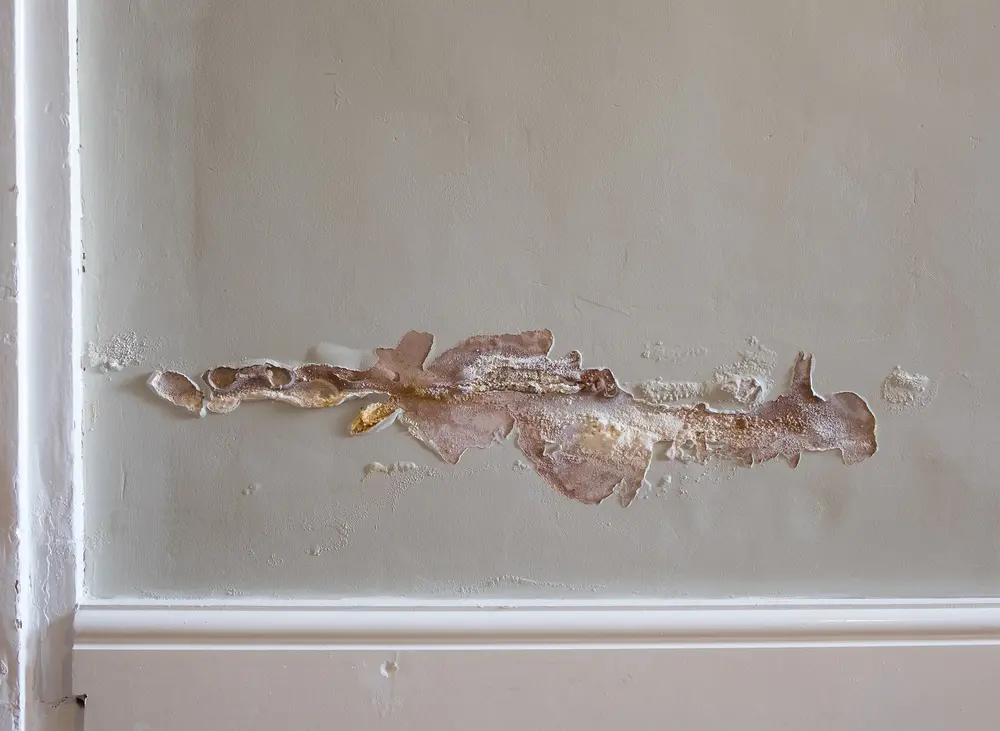
Rising damp is the upward movement of moisture from the ground through porous materials in buildings.
Rising damp occurs when groundwater moves up through porous building materials, such as walls or floors, by capillary action.
It usually affects ground floor areas and basements, and signs include tide marks, damp patches, and blistering paint or wallpaper at the base of walls.
Dry Rot
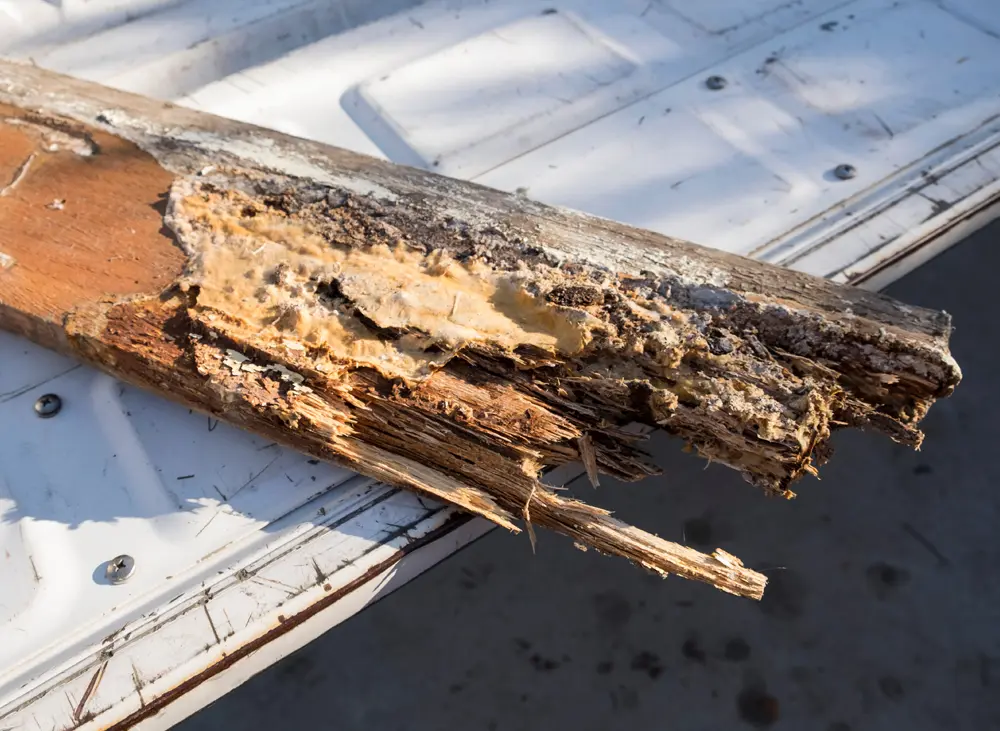
Dry rot is the deterioration of wood caused by different types of fungi that consume the structural elements responsible for its firmness and strength. If left untreated, dry rot progresses through four primary stages.
Initially, it begins as a minuscule spore, which, when present in significant quantities, becomes visible as a fine dust in shades of reddish brown or orange. When provided with enough moisture, these spores develop into delicate white tendrils called hyphae. Given the opportunity to sprout, a substantial cluster known as a mycelium takes shape. Ultimately, a large mass resembling a fruit emerges, releasing fresh spores into the surrounding air.
Wet Rot
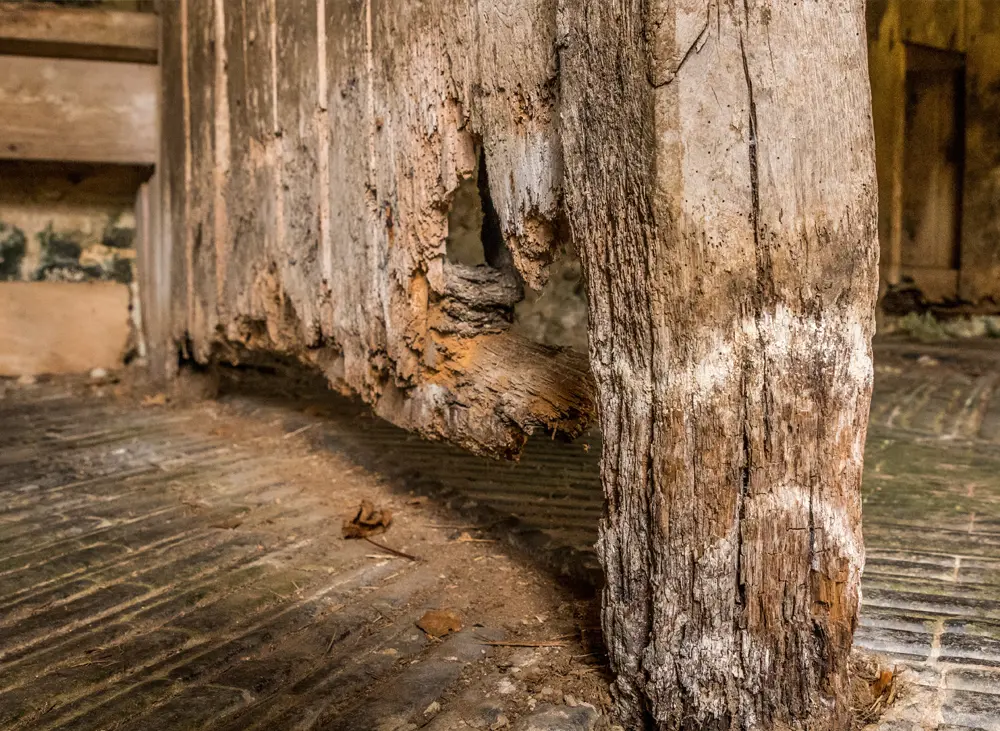
The deterioration known as wet rot arises from the activity of diverse fungi that nourish themselves and thrive by consuming timber. As a result, the structural integrity of the timber can be severely compromised, leading to weakening and decomposition.
It is important to note that wet rot is not exclusive to older buildings; even modern structures are susceptible, particularly when inadequate ventilation exacerbates the already damp and moist environment. Symptoms of wet rot often include shrinkage and a fragile timber structure, which undermines its ability to bear loads and may necessitate complete replacement of the affected area's timber structure.
Penetrating Damp
Penetrating damp refers to the infiltration of moisture that horizontally seeps through a building's structure from the outside. This commonly occurs due to factors like roof or pipework leaks, poorly fitted windows, doors, and air vents, obstructed or damaged guttering, defective flashing, cracks in walls, and deteriorated pointing, among others.
Although dampness can often be visually detected, determining its root cause can be challenging and is best entrusted to a skilled professional in damp proofing equipped with specialized tools. Once the source of the dampness has been identified, appropriate measures can be taken. This may involve repairing any damaged components mentioned earlier or applying a transparent water-repellent treatment to external walls. It's worth noting that breathable treatments are also available as an option.
Condensation
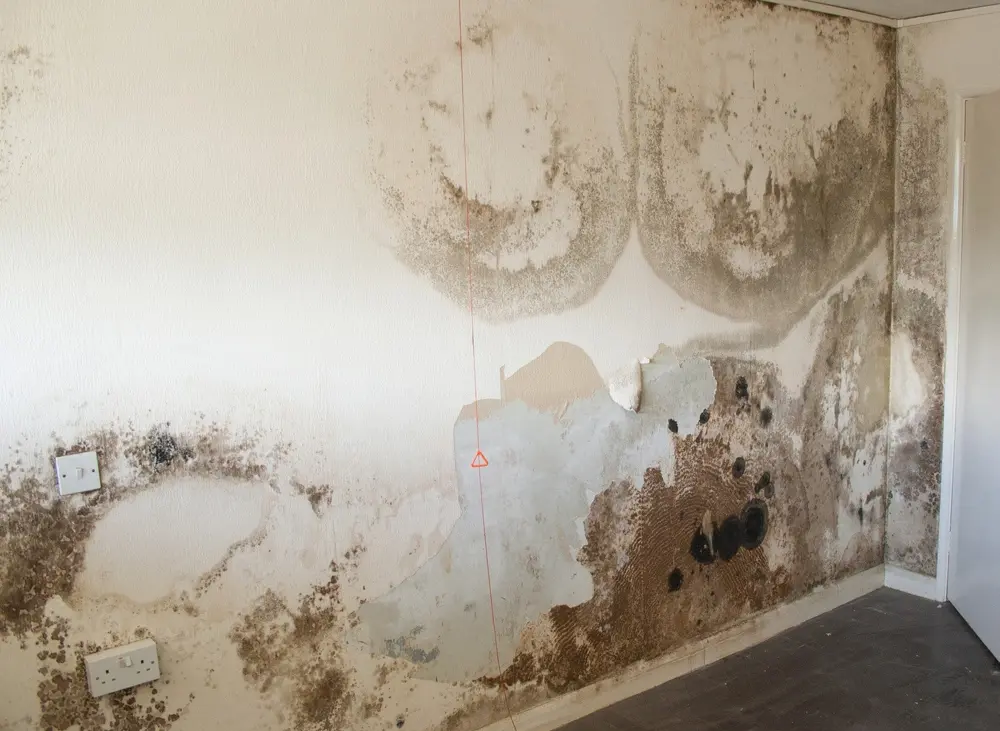
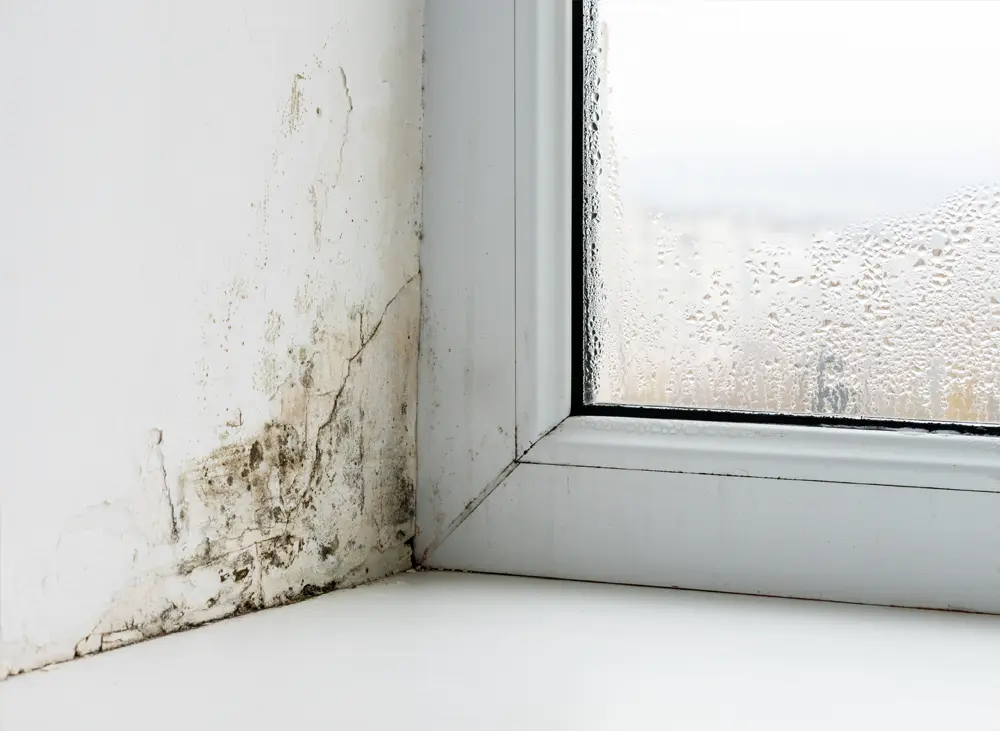
Condensation stands as one of the most prevalent forms of dampness found in buildings. It arises when warm air, which holds a greater amount of moisture compared to cold air, encounters a cold surface such as a wall or window. The moisture present in the warm air condenses, transforming into liquid droplets. The sources of moisture in warm air can vary and include activities like breathing, cooking, bathing/showering, and washing and drying clothes.
The period of condensation typically spans from October to April, aligning with lower external temperatures compared to the internal ones. It often becomes visible as water droplets forming on impermeable surfaces like windows or as the growth of mold on porous surfaces.
Basement Conversions
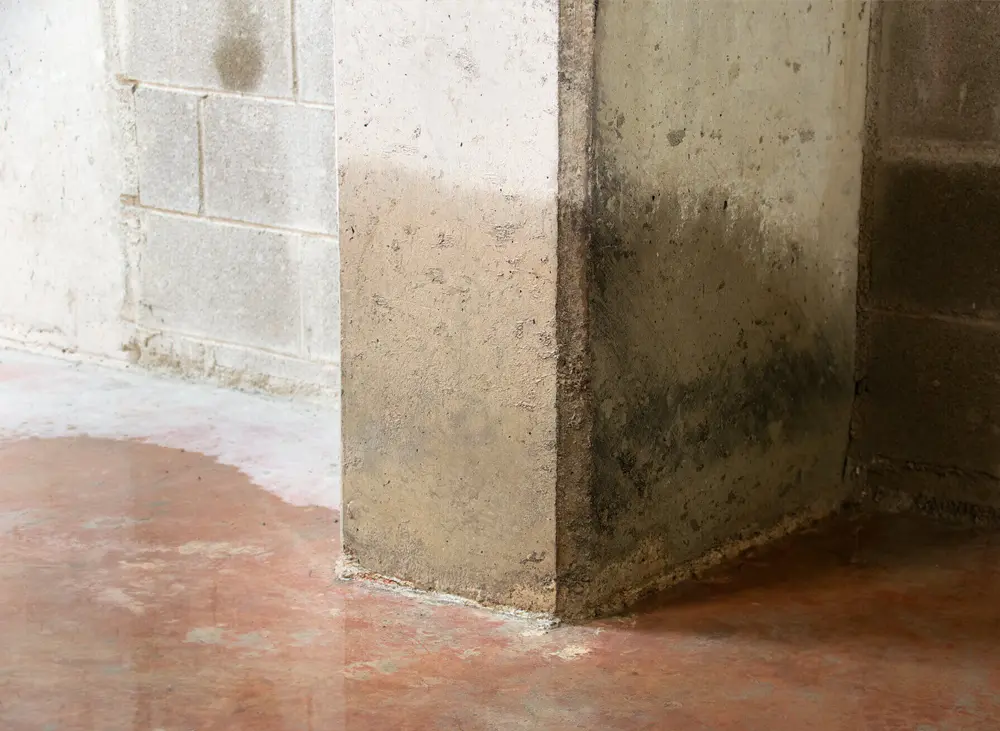
Old cellars and basements often require waterproofing or "tanking" to be suitable for habitation. The porous brickwork in these areas tends to absorb moisture from the surrounding soil, which becomes a persistent issue in regions with poor drainage or a high water table.
Various tanking methods have been developed over time, and the most suitable approach depends on the severity of water ingress. In the UK, cavity drainage membrane systems are the preferred choice for waterproofing old basements. These systems utilize a durable plastic membrane to line the basement walls, redirecting water to a sump and pump instead of physically holding it back. Consequently, meticulous preparation of the old brick substrate is less crucial compared to traditional waterproofing systems.
It is important to identify the cause of dampness in your Blackburn property accurately to implement appropriate remedial measures.
Call us on 07804486299 to arrange a visit to asses your damp area and work out the best solution.